
Bitcoin Bites #1
Great design in bitcoin, one detail at a time.
Bitcoin design can be challenging.
Designers must always strike a balance between security and simplicity. Educate without being condescending. Build trust in something decentralized. Make the irreversible feel safe.
But some teams are nailing it. We’ve noticed. Some design executions deserve to be highlighted and studied.
So we’re starting Bitcoin Bites, a collection of real examples from Bitcoin products doing design really well. No theory, no fluff. Just: here’s what works, and here’s why.
We think this is useful for anyone building in the space. Or anyone trying to understand what thoughtful Bitcoin UX looks like.
If you build Bitcoin products, this might give you ideas. If you’re learning about Bitcoin design, you’ll see what good looks like. And if you just think thoughtful design is cool, you’ll probably enjoy it.
Giving users grace
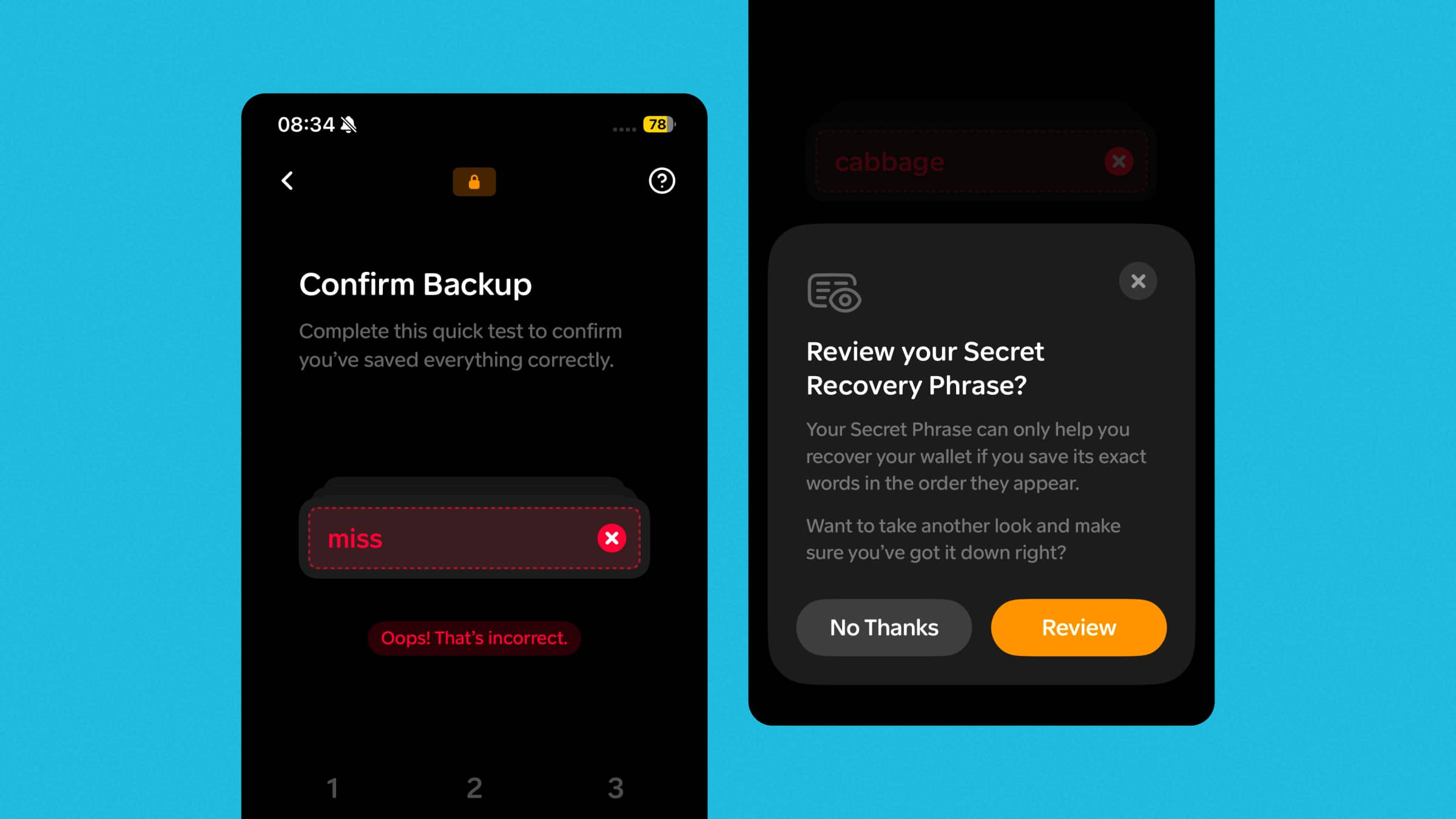
After showing you your seed phrase, Family asks you to confirm the order of 4 random words. Get one wrong twice in a row, and a friendly bottom sheet slides up offering to let you review the phrase again.
💡 Behind the bite
The detail that matters is twice in a row. One wrong tap could be a slip. Two in a row? That’s a signal you might actually need help. Family assumes competence first. You’re not being babysat, you’re being supported.
Offline transparency
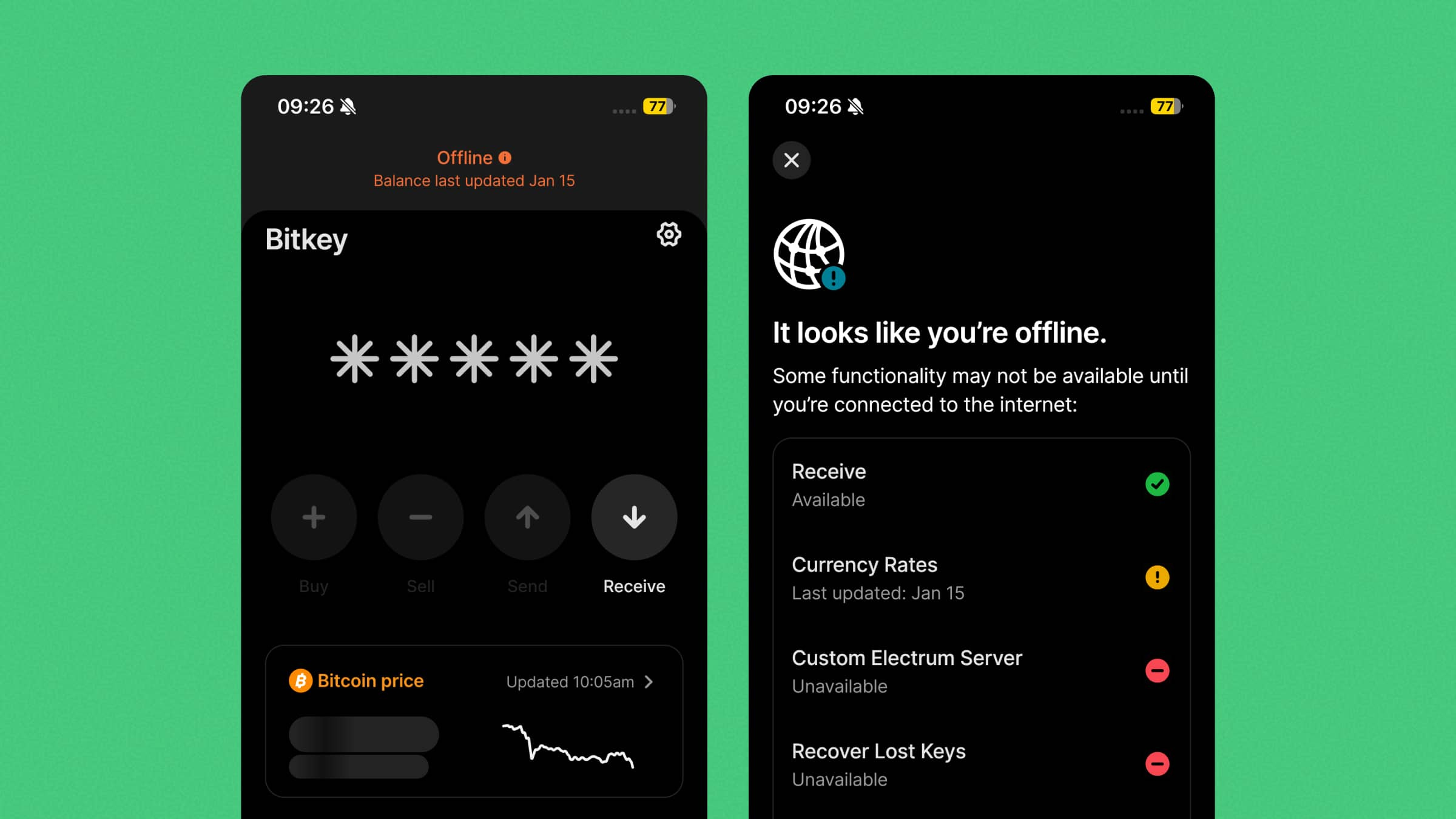
Bitkey doesn’t just tell you you’re offline, it tells you how being offline affects you. An indicator shows when your balance was last updated, and tapping it reveals exactly which features still work, which are stale, and which are completely unavailable.
💡 Behind the bite
Most apps treat offline as a binary: you’re either connected or you’re not. Bitkey breaks it down. You can still receive bitcoin, your currency rates are just a day old, but sending is off the table.
Translating the protocol
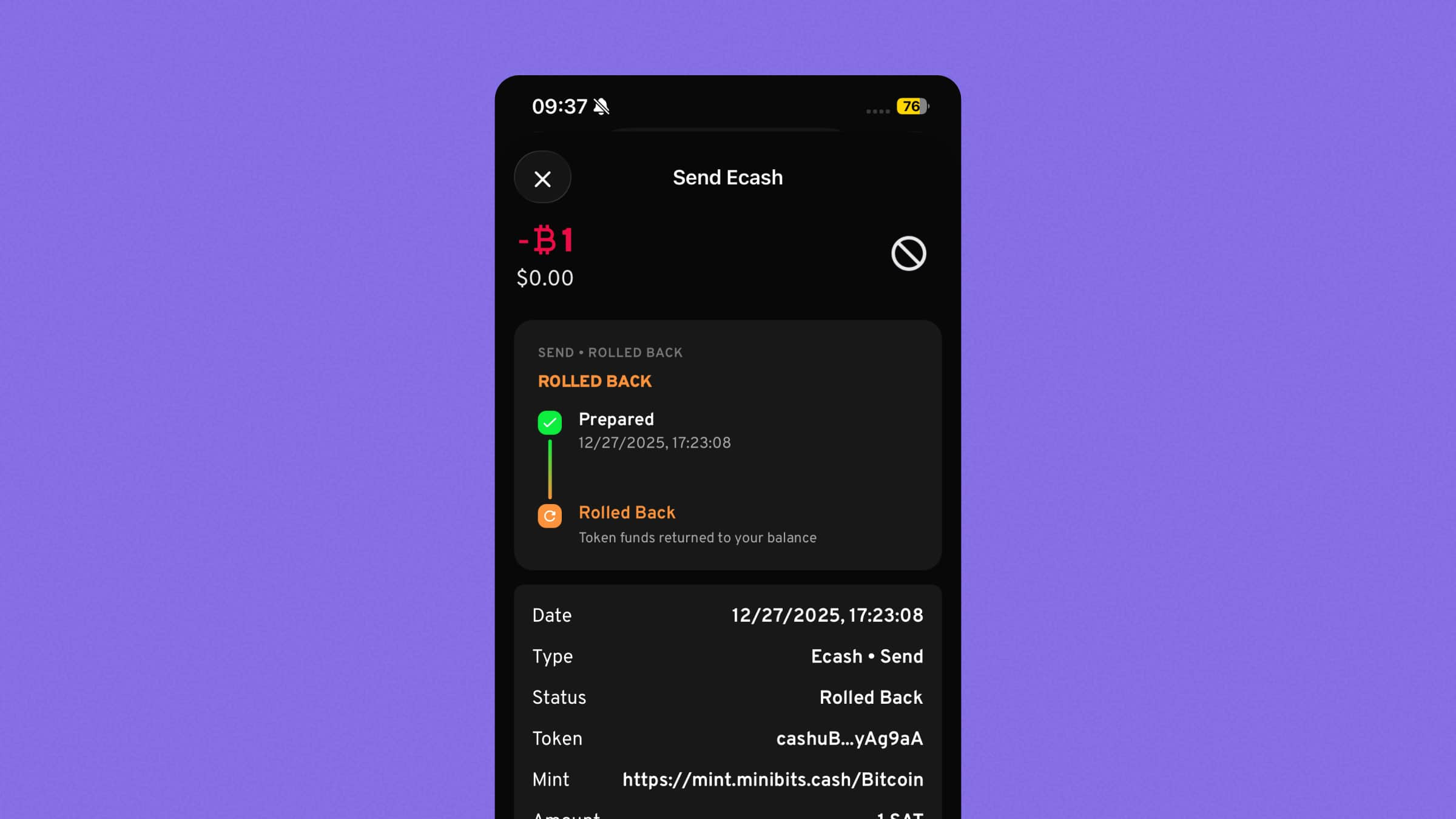
Ecash introduces UX challenges you won’t find on-chain or in lightning. When you generate a token that never gets claimed, you can redeem it yourself, but the mint has no concept of “yours” or “theirs.” Sovran names this action “Rolled Back.”
💡 Behind the bite
“Rolled back” matches how a user might actually think about it: you had a balance, sent some out, and now you’re pulling it back. The timeline view reinforces this. Showing when the token was generated and when it returned, turning an abstract protocol event into a story you can follow.
That’s it for this first edition of Bitcoin Bites, thanks for reading. If you see something worth highlighting, send it to erikcativo@pm.me. Let’s shine a light on the designers getting things right.
I'm thoroughly enjoying these. Thanks for sharing your insights.